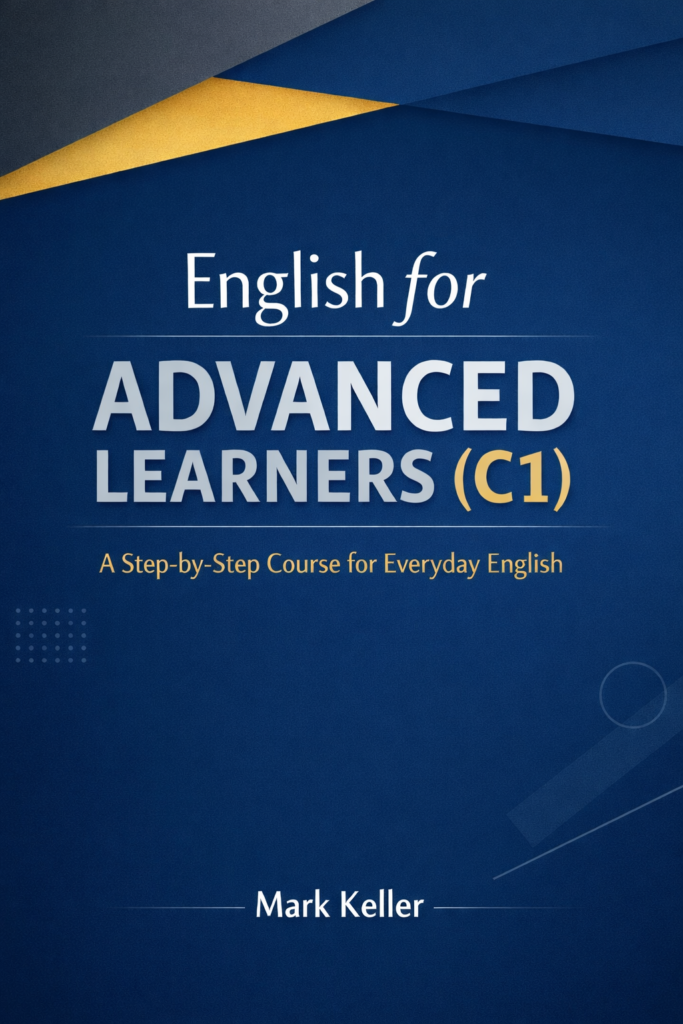
Reach Advanced English with Confidence: Introducing English for ADVANCED LEARNERS (C1) by Mark Keller
If you’ve already built a strong foundation in English and are ready to move beyond upper-intermediate, your next challenge is […]
If you’ve already built a strong foundation in English and are ready to move beyond upper-intermediate, your next challenge is […]

Many English learners focus on memorizing vocabulary. However, one powerful way to grow your vocabulary quickly is by learning suffixes.
Understanding Suffixes in English: A Simple Guide for Learners Read More »

The word “also” seems simple, but many English learners use it incorrectly. Even advanced speakers sometimes place it in the
Common Mistakes English Learners Make with the Word “Also” Read More »
After 25+ years of teaching serious learners, I’ve seen the same patterns again and again. Capable students often: None of
The 7 Hidden Listening Mistakes That Keep You at B2 Read More »

Level: Junior HighTheme: Music / SingingFocus: Vocabulary, Listening, Pronunciation, Discussion, Writing 1. Vocabulary Preview Instructions: Read the words below. Check
ESL Worksheet: Shape of You – Vocabulary, Listening, and Singing Read More »

Have you ever heard someone say, “You’re on thin ice”?If you’re not sure what that means, you might be in
What Does “On Thin Ice” Mean? | English Idiom Quiz + History Read More »

Are you confused about the difference between a chore and an errand? Many English learners struggle with these two everyday
Chore vs. Errand: What’s the Difference? (With Clear Examples) Read More »

When learning English, many students use the word “afterwards” to describe what happens later. It’s a useful word—but it’s often
Common Mistakes with the Word “Afterwards” (and How to Fix Them!) Read More »

When is morning actually morning? What time does the afternoon begin? And can you say “Good night” when you meet
🌞 Morning, Afternoon, or Evening? Learn to Use Time Expressions Like a Native Speaker! Read More »

Many English learners want to sound natural by using conversational phrases like “after all.”However, “after all” is often misused —
How to Use “After All” Correctly in English (and Avoid Common Mistakes!) Read More »