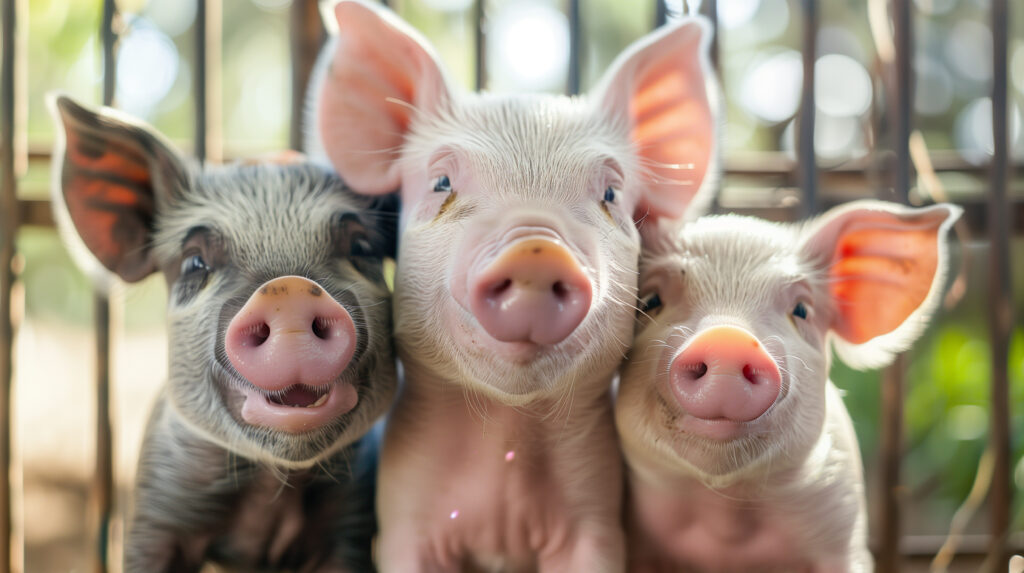
Have you ever wondered why English has different words for the animal and the meat?
Why do we say:
- A pig lives on a farm.
- We eat pork.
But we also say:
- A cow gives milk.
- We eat beef.
And:
- A sheep lives in a field.
- We eat mutton.
It seems strange—but there’s a fascinating reason!
The Story Begins Nearly 1,000 Years Ago
In 1066, Norman Conquest changed the English language forever.
The Normans came from France and conquered England. After they won:
- The peasants who looked after the animals spoke Old English.
- The rich nobles who ate the food spoke Norman French.
Because of this, two different sets of words became common.
The farmers used English words:
- pig
- cow
- sheep
- calf
The nobles used French words when talking about the meat:
- pork
- beef
- mutton
- veal
Over time, English kept both words.
Common Animal and Meat Words
| Animal | Meat |
|---|---|
| Pig | Pork |
| Cow | Beef |
| Calf | Veal |
| Sheep | Mutton |
| Deer | Venison |
Notice that the animal and the meat often have completely different names.
What About Chicken?
Not every animal follows this pattern.
We say:
- chicken → chicken
- turkey → turkey
- duck → duck
- fish → fish
These animals kept the same name for both the living animal and the meat.
Easy Example Sentences
Animals
- The pig is sleeping.
- The cow is eating grass.
- The sheep are on the hill.
Meat
- I like pork.
- Beef is expensive.
- We had roast chicken for dinner.
- She doesn’t eat veal.
Vocabulary
Peasant – a poor farmer.
Noble – a rich or powerful person.
Conquer – to take control of a country by force.
Norman French – the French language spoken by the Norman rulers after 1066.
Old English – the language spoken in England before modern English developed.
Did You Know?
Around 30% of modern English vocabulary comes from French. That’s one reason English has so many words with similar meanings but different origins.
For example:
- ask (English) → inquire (French)
- help (English) → assist (French)
- begin (English) → commence (French)
Knowing a little history helps explain why English sometimes seems so confusing!
Quick Quiz
1. Which animal gives us pork?
A) Cow
B) Pig
C) Sheep
2. Which meat comes from a cow?
A) Beef
B) Pork
C) Venison
3. Why are there different words?
A) They are random.
B) English borrowed many meat words from French after the Norman Conquest.
C) Nobody knows.
Answers: 1) B 2) A 3) B
Final Thought
English isn’t always illogical—it often reflects its history.
The next time you’re eating beef or pork, remember that you’re also using words that tell the story of a conquest nearly a thousand years ago. Understanding the history behind English makes learning the language even more interesting!
Ready to Learn More?
English is full of interesting stories like this one. Understanding why English works the way it does can make learning easier, more enjoyable, and easier to remember.
If you’d like to improve your English with clear explanations, practical speaking practice, and lessons designed for real-life communication, I’d love to help.
Book your FREE 30-minute trial lesson today!
During your free lesson, you’ll:
- Find your current English level
- Practice speaking in a relaxed, friendly environment
- Receive personalized feedback
- Create a study plan that matches your goals
Visit www.MKsEnglish.com to book your free trial and start speaking English with confidence.
See you in class!